How to Identify and Treat Insects and Diseases of Houseplants
Many of us will be picking up a houseplant for someone on our gift list. And many of us will add to the houseplant collection we already have. Even though the plants look healthy at the garden center, here are a few things to lookout for before bringing that plant home.
1)
Healthy looking roots – most nursery and garden centers will allow you to gently slide the root ball from the container. The roots should extend to the edges and be mostly white and pliable. If the roots are black, or brittle, put it back. If the root ball is smelly or very wet, put it back. The continued dryness can be the cause of the brittle roots, whereas the soggy, smelly soil around slimy roots is an indication that the plant has been over-watered many times.
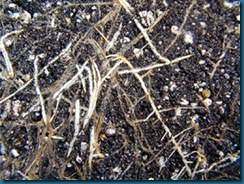 |
| High Salt Content Turn Roots Brown |
High mineral content in the water, most specifically salts, can cause root damage as seen here. The roots are brown, put this plant down.
2)
Spotted leaves – If the leaves have a brown tip, this plant has probably been watered with chlorinated tap water, or fluoridated tap water. Don’t buy this one!
 |
| Fluoride Damage |
Spot on leaves are very common in houseplants. Scalds on leaves can be caused by water drops on leaves and the light is magnified to literally burn the leaf at that spot. The bleaching of the chlorophyll kills the leaf tissue.
Take a good look at potential houseplants before leaving the garden center. Clean, healthy plants will bring a lovely addition to your home.
.3)
Spots in Patterns on Leaves
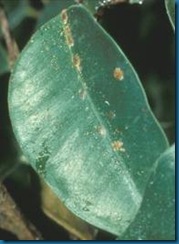

Once home, the houseplants can get infected with diseases and insects. These pattern spots are a sign of disease in the houseplant. Some are tan, while other spots seem to have a ring or halo. There is no remedy for bacterial diseases in houseplants. Remove infected portions of the plant. If the bacteria is in all portions of the plant, discard it.
Virus infections are indicated by spots, mosaic stunting, and crinkled leaves. Virus infections cannot be cured, but rarely harm the plant. Isolate the infected plant from others and don’t cross use tools that have been in contact with the sick plant to healthy ones. Wipe with a bleach solution and mild soap.
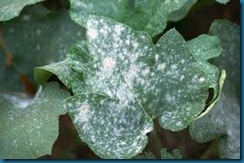 |
| Powdery Mildew on Ivy |
Botrytis Blight, or Grey mold is fuzzy and feeds on dying plant tissue, usually in a cool, dark area. It feeds on broken or dying plant material. Frequent inspection can catch this mold early. Treatment with a fungicide is required to control gray mold. Plants that are prone to grey mold are English Ivy, Dracaena, African Violet, Lipstick vine,
Peperomia, and grape ivy. Since most homes are too dry, rather than too wet, grey mold is more prevalent in the nursery setting. Inspect all plants before purchasing them.
Molds and mildews may appear on your plant if the temperatures are
too cool, and allowing the soil to remain
too moist.
Insect pests seem to be the most cause of houseplant concerns but actually, watering issues cause much of the demise in houseplants. Use a Neem oil specifically for indoor use to keep molds, mildews and root rot from too much water in check.
Here are a few insects that you may see, and some simple remedies that are safe and effective.
Once home, inspect the plant for insects and give the whole plant a good wash. Using a hard spray will knock off insects like
aphids. A dish washing liquid in solution will also work to wash off your new plant. The dish washing liquid makes the water wetter and will remove dust and dirt as well.
 |
| Aphids |
Aphids are probably the most common pest on houseplants. These soft bodied, pear shaped creatures really
suck! No seriously, they
suck the plant juices from the underside of new growth causing deformed, or curled leaves.
 |
| Spider Mite Web |
 |
| Spider Mite Damage |
Spider Mites seem to be the second most common pest on houseplants. I showed a
pothos of mine in a previous post that had webbing in the branches and leaves. Too small for the human eye to see at 1/50 inch, these spider mites feed on leaves and infected leaves look grayish or yellow speckled.
Spider mites are not insects, but are related to spiders! (amazing!) Too dry of environment, and dusty conditions will allow these mite to thrive. Here again, that water blast will drive the spider mites off. Misting the plant frequently, 2 – 3 times a week, will help from re-infestation. Mites do not like water.
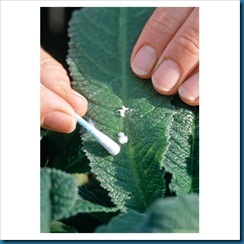 |
| Remove Mealy Bugs with Alcohol Swab |
 |
| Infestation of Mealy Bugs |
Mealy Bugs look like a cotton. These soft creatures are a major pest concern for houseplants. They like new growth at the stems connection, and like aphids, they suck plant juices which causes leaves to wilt.
 |
| Spray solution of Safer(R) Soap |
The swabbing with alcohol is an easy remedy for mealy bugs. But a spray of
Insecticidal soap
will also work.
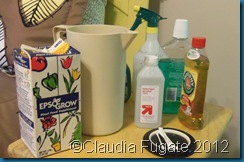 |
| My arsonal |
 |
| White Flies |
White flies are another pest we see frequently in houseplants. The shriveled leaves are again, from sucking mouth parts of the white fly. Being smaller than fleas, a female can lay up to 150-300 eggs making the problem even more apparent. Remove molted leaves that look like they have a pattern or pathways on the underside. Spray with an
Insecticidal soap weekly until the plant is showing no more signs of white fly.
Sticky traps are safe to use in the home, and they also will catch thrips.
 |
| Thrips Damage |
 |
| Sticky traps |
are not as common on houseplants, but if you take the plants outside during warm weather, thrips can hitchhike indoors on your plants. Adults and larvae will suck plant juices from plant cells and the damaged leaves of the plant will have a white or silver-flecked section on the leaf and is easily seen with light passing through.
can fly and jump when disturbed. Control of thrips is similar to aphids – insecticidal soap, and a soupy water spray will control this pest.
looks like brown spots on stems of plants, but these spots move! Initially scale is nearly invisible, but as they age they turn darker, and the outer shell is more visible.
This sucker (no pun intended) will secrete a sticky substance called honeydew. The honeydew allows sooty mold to develop. This is also true of the scale, mealy bugs, and aphids.
Bacillus thuringiensis will attach the larvae in the soil. This natural bacteria is very effective and can be purchases at the hardware store or garden center. Insecticidal soup will work if the soil is saturated.
The amount of light for a specific plant, it’s watering needs, and ideal temperature are
Humidity, and type of soil also specific for a plant. A care sheet for a houseplant is usually available at the garden center. On line sites like
can give a great amount of information. Don't let these pests stop you from enjoying houseplants. They really require minimal care for a great reward.
What houseplants do you grow? What problems have you had? If I can’t answer you questions, I’m sure many of our gardening community will be able to help. Leave your comments, I love comments.


