More than color, foliage is that element of the plant that creates its identity. Foliage can be big, bold, leafy, round, waxy, ferny, and strappy. The type of foliage creates texture, contrast, and may be the focal point of a section of garden, or foliage can be the backdrop to any manner of visual delights we care to place there.
I have been known to rush to the garden center to purchase the latest perennial that was in bloom. But that love affair with that plant faded along with the blossom a few weeks later. So, what is left after the blooms fade?
Foliage – beautiful, season long foliage. Here are some plants that I find create moods in the garden just for the color or texture that it’s foliage offers.

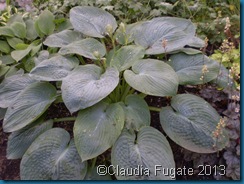


The staple in my garden is the Hosta. Mini-hostas 2 inches in diameter, or large Hosta that span 4’ – 5’. The leaves are so varied in each variety. Some are gold, some are dark green, some are blue, some are chartreuse, some are green with white edges, some are white with green edges. Some are blue with green stripes, some are light green with dark green shades. Some Hosta are puckered, while some are smooth. The point is, the foliage is the attraction and the design element in the garden.
I pair Hosta with plants that have a airy feel in the foliage. Plants like Astilbe or ferns. My favorite fern is the Japanese Painted Fern – Athyrium niponicum, var. pictum. This plant does well in shade, and fronds are in various shades of burgundy, silver, green, and rose.
 |
| Japanese Painted Fern |
One plant that has great foliage is
Hakonechloa macra, ‘Aureola’, a grass that holds its best color in part shade – right along with the Hosta.

 |
| Maiden Hair Fern |
Maiden Hair fern has a airy frond, with black stems. A very nice plant for shade that is slow growing.

As this Hosta is tucked up near a boulder, the ferns creep in behind, the moss on the stone gives texture, and the Celandine poppies offer yet another shade of green, and a deeply lobed leaf. No blooms but a lot of color and texture.
Another plant group that I’m enchanted with is the Heuchera, Coral bells. There are many, many new cultivars coming on the market, and the color of these plants is amazing. I think that ‘salad’ textures are a good comparison, and many of my Heuchera stay looking fresh all through winter.

This photo is varieties from the “Crisp” series, and I have the ”Dolce” collection. With names like Carmel, Delta Dawn, Plum Royale, Cajun Fire, Apple Crisp, and Black Out, one can surmise a full range of colors from Black, Browns, Orange, Purple, Red, and Silver. Mass planting of one variety would most definitely catch your eye from across the yard, or, as in this photo, a mix looks delicious.
Other plants offer a coolness in the
silver foliage they offer. Plants like Rose Campion, Artemisia, and lavender have a silver foliage that blends well into a hot, dry garden. A nice silver plant, “Helen Von Stein’
Stachys byzantina , has wide soft velvety leaves.
 |
| Brunnera |
A spring plant that holds up well with enough water during the heat of the season is Jack Frost, a
Brunnera macrophylla. Hardy in Zone 3-8, the shade garden is a great place for Brunnera with Hosta and ferns.
Pulmonaria, hardy to Zone 4-9, likes moist, woodland setting with rich soil. The silvery shades brighten a shady garden with names like Silver Shimmers, Raspberry Splash, or Victorian Brooch.
 |
| Pulmonaria, Silver Shimmers |
 |
| Pulmonaria, Victorian Brooch |
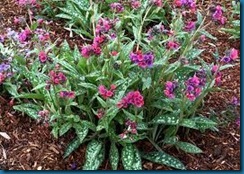 |
| Pulmonaria, Raspberry Splash |
Sunny gardens usually produce plants that like to show off with spectacular blooms. Here are a few colorful plants that rely on foliage for added interest in the sunny garden.
 |
| Marchen Sedum, Dragon's Blood |
 |
| Sedum, Vera Jamison |
 |
| Fuldaglow Sedum |
These sedums are low growers but don’t underestimate the impact of these bright burgundy flesh. The Fundaglow is paired with a silver foliage plant, and the contrast is evident. Many
silver foliage plants do well in the full sun, as do the sedums, and both require minimal watering. I believe the grass in this photo is a Blue Fescue, a small ornamental grass.
Husker Red, a
Penstamon, is one of my favorites for it’s
burgundy foliage. It too, will take sun. Paired with Artemisia, lambs ear, or the annual, Dusty Miller, this plant is stunning.
 |
| Husker Red in Landscape |
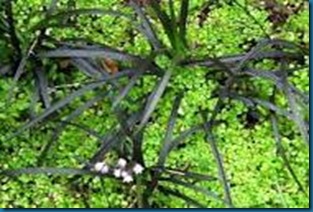 |
| Black Mondo Grass with Baby's Tears |
This
black foliage is called Mondo Grass,
Ophiopogon planiscapus, ‘Nigrescens. It is mixed with a Baby’s Tears ground cover in such a way that both plants become featured. Black Mondo grass can be planted en masse or individually as it is here. Hardy in Zone 5-10, Mondo grass is evergreen.
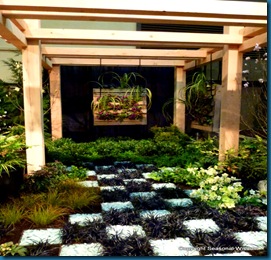
Many thanks to
SeasonalWisdom.com for this lovely photo using colors and textures of foliage plants in this manner.
These perennials are only a few of great plant choices when you are looking for foliage that will carry the garden past the blooms. Thanks for visiting today, and leave a comment, please. I’d love to know what foliage plants you use in your garden.


