When I was working at local garden centers in the early spring, I had so many folks come in and want the tulips, or daffodils that were putting on their seasonal show. The best I could do was show them the few we had potted up in containers. So I want to remind you that this is the time to plant spring bulbs . The few hours of planting now in the chill of fall will pay off big time in March and April.
.
The basics of planting spring bulbs are 1) Pick firm bulbs. These are available are garden centers and on line from growers.
2) Plant after the ground is cool, after frost, but before ground freezes. Getting bulbs in the ground 6 weeks before ground freezes enables the roots to develop. In areas where you do not have freezing winter soils, you can get the bulbs ready to plant by chilling them 6 – 8 weeks in the refrigerator; then plant.
3) Depth of planting depends on the bulb size. A general rule is to plant to a depth of 3x the diameter of the bulb. Tulips and Daffs – 7-8” deep; crocus, 4-5” deep.
 Soil in the planting area needs to drain well. Adding compost or peat moss will aid in this. Any bulb needs a sunny area but as the deciduous trees are leafless in the early spring, sun is usually not an issue.
4) Plant pointed end up. Roots will extend from the flat end but if you, by chance get this part wrong, these determined guys will not disappoint us and will find ‘up’. I usually add bone meal to the planting hole. The phosphorous this adds will grow stronger roots for many years of blooms.

5) Plant bulbs in groups. A recurring theme in landscape to to plant in odd numbers – 3-5-7 – This seems to be most pleasing to the eye.

6) Consider bloom times of the bulbs you pick. Some will bloom early, some mid-season, and others will bloom late season. The bulb descriptions will tell you the approximate bloom time. By planting in sequence, you can extend the spring color for a couple of months, not just a few weeks.
 This is my grandson, Luke. His garden pick many years ago was crocus
  and we still look forward to seeing them each spring.

Tulips have a tradition over 400 years of being ‘Spring’. Originating in the Netherland, tulips have dozens of colors, and varieties from ‘Parrots’ which are fringed, to simple cups. Squirrels will dig up these bulbs and deer find tulips tasty.

 Daffodils, are Jonquils, are Narcissus. From yellows, to pinks, these bulbs will naturalize and give you more and more blooms each year. Deer and rodent resistant, Daffodils are quite reliable and showy. Some are ‘double’ petals, some are dual colors. I know you will have a hard time deciding which to include in your garden.
 These Hyacinth are the most fragrant of the spring bulbs The blooms last a couple of weeks and are high on 6-12” spikes. Water in the fall if rain is scarce. The show appears in March and April.


 These bulbs will usher in the spring with all of the promises of hope and growth we look forward to all winter.
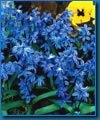
Top right picture is ‘Glory in the Snow’, or Chionodoxa. The Miscari – or Grape Hyacinth is a favorite of mine. Small, 6-7” high and come in cobalt blue, ice blue, and white. The small photo on the left is Scilla. Don’t overlook these minor bulbs.
The planting time for spring bulbs is running short. In my Zone 5B garden, we can plant until the ground freezes, usually in December. So count back your 6 – 8 weeks, and mid-November is about the latest we can plant. So head out to the garden center and ‘think spring’.

What is your favorite spring bulb? Thanks for stopping by today.
. The few hours of planting now in the chill of fall will pay off big time in March and April..

The basics of planting spring bulbs are 1) Pick firm bulbs. These are available are garden centers and on line from growers.
2) Plant after the ground is cool, after frost, but before ground freezes. Getting bulbs in the ground 6 weeks before ground freezes enables the roots to develop. In areas where you do not have freezing winter soils, you can get the bulbs ready to plant by chilling them 6 – 8 weeks in the refrigerator; then plant.
3) Depth of planting depends on the bulb size. A general rule is to plant to a depth of 3x the diameter of the bulb. Tulips and Daffs – 7-8” deep; crocus, 4-5” deep.
 Soil in the planting area needs to drain well. Adding compost or peat moss will aid in this. Any bulb needs a sunny area but as the deciduous trees are leafless in the early spring, sun is usually not an issue.
4) Plant pointed end up. Roots will extend from the flat end but if you, by chance get this part wrong, these determined guys will not disappoint us and will find ‘up’. I usually add bone meal to the planting hole. The phosphorous this adds will grow stronger roots for many years of blooms.

5) Plant bulbs in groups. A recurring theme in landscape to to plant in odd numbers – 3-5-7 – This seems to be most pleasing to the eye.

6) Consider bloom times of the bulbs you pick. Some will bloom early, some mid-season, and others will bloom late season. The bulb descriptions will tell you the approximate bloom time. By planting in sequence, you can extend the spring color for a couple of months, not just a few weeks.
 This is my grandson, Luke. His garden pick many years ago was crocus and we still look forward to seeing them each spring.
Tulips have a tradition over 400 years of being ‘Spring’. Originating in the Netherland, tulips have dozens of colors, and varieties from ‘Parrots’ which are fringed, to simple cups. Squirrels will dig up these bulbs and deer find tulips tasty.

 Daffodils, are Jonquils, are Narcissus. From yellows, to pinks, these bulbs will naturalize and give you more and more blooms each year. Deer and rodent resistant, Daffodils are quite reliable and showy. Some are ‘double’ petals, some are dual colors. I know you will have a hard time deciding which to include in your garden.
  These Hyacinth are the most fragrant of the spring bulbs The blooms last a couple of weeks and are high on 6-12” spikes. Water in the fall if rain is scarce. The show appears in March and April.

 These bulbs will usher in the spring with all of the promises of hope and growth we look forward to all winter.
Top right picture is ‘Glory in the Snow’, or Chionodoxa. The Miscari – or Grape Hyacinth
is a favorite of mine. Small, 6-7” high and come in cobalt blue, ice blue, and white. The small photo on the left is Scilla. Don’t overlook these minor bulbs. The planting time for spring bulbs is running short. In my Zone 5B garden, we can plant until the ground freezes, usually in December. So count back your 6 – 8 weeks, and mid-November is about the latest we can plant. So head out to the garden center and ‘think spring’.

What is your favorite spring bulb? Thanks for stopping by today.


