Showing posts with label drought. Show all posts

Monday, January 27, 2014

Organic Lawns Start with the Right Seed


Nature has a way of giving us help as we try to reduce use of chemical fertilizers, insecticides, and herbicides in the home landscape.  All we have to do is pay attention.  The past two seasons my hubby and I have made a point to seed in several areas for additional lawn.


As we shopped for seed, we came across a term that was new to me, Endophyte-enhanced turf grass. This is what I'm talking about.

Endophytes are a  fungi that naturally infect the blades of grass.  Not a harmful fungi, a beneficial fungi that makes the grass resistant to insects and diseases. Studies have shown that  Endophyte infected grasses are less likely to be damaged by insects such as billbugs, cinchbugs, and sod webworms.  The chemical that lives withing the plant does not harm the grass plant, but the insects don't fair as well.  Some bugs are repelled by the plant, where other bugs eat the blades and are poisoned.  The natural compound in the plant works on surface feeding insect. 
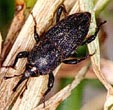
Billbug

Cut worm

Sod web worm

Endophyte-enhanced grass also has been shown to resist stresses of heat and drought, and recovers better in the fall.
Excessive usage of Water on Lawns

 Endophyte-enhanced seed blends have also shown resistance to diseases like dollar spot, and red thread. 
Dollar Spot

Red Thread

Why does this fungi seem so important?  In our efforts to reduce chemicals in the landscape, Endophyte-enhanced grass is environmentally friendly and are not genetically modified (GMO).  The time saved and money spent on chemical treatments is a great eco-friendly choice in the landscape.

The seed producers have gone to great lengths to show the benefits in their products.  Many Fescue, Ryegrass, and Bluegrass blends are available.  Local seed formulated in your area are probably best to deal with insects, diseases, and the climate. Landscapes that are sunny, shady, dry, or high traffic areas have specific blends. Local garden centers that sell seed can usually advise you on what seed will meed your requirements. A list of grass varieties can be accessed at The National Turfgrass Evaluation Program at www.ntep.org/.


Endophyte-enhanced grasses are not to be used in pastures where grazing animals feed.  Cattle and horses get very sick and have died eating Endophyte-enhanced pastures.  But what if you have a cat or dog that munches on grass occasionally.  An Assistant Professor from the University of Illinois, Urbana-Champaign College of Veterinary Medicine, Sandra Yi, states that there is no danger for our domestic pets. There has never been a toxic reaction that has been reported for these animals.


 Over seeding the lawn with these Endophyte-enhanced seed can go a long way to get your grass more organic.  I wrote a post earlier this week about dormant seeding the lawn during winter. So, getting more and more Endophyte-enriched seed integrated into the lawn will reduce the need for pesticides, minimal fertilizers, and water.


Over seeding in the fall will also benefit the lawn.  Just make sure that the seed is Endophyte-enhanced, makes contact with the soil, and is kept moist until it germinates. Annual over seeding will enhance weak, thin grass, and will fill in bare spots.


Wednesday, September 11, 2013

Late Summer Projects Need Special Attention


As we continue to reduce gardens and ease the required maintenance of the yard we, once again, find more work to be done.  Where is that easier to maintain garden? 

OK, this is what happened.  First, when the new border of shrubbery was installed, I found that one of the shrubs, a viburnum, Blue Muffin®, may need a companion viburnum to successfully pollinate it.  This Chicago Lustre® was on my shopping list. 

blue muffin viburnum

These blue berries are the hallmark of the Blue Muffin® and I certainly wanted to get blooms and berries next season.  The garden center where we used to work had one Chicago Lustr® left.  It was a balled and burlapped three foot specimen so we eagerly loaded it up into the pickup.  I’m not sure how close  these two shrubs need to be for this pollination to be effective, so we needed some space.
100_3153
This large Hosta is Wheaten Blue®.  The added sun this area of the garden is getting caused the blueness of it to fade to this dark green.  So this was a great spot for the viburnum and the Wheaten Blue® needed a new home.
100_3157
During the scramble to get shade-loving plants out of the sun when we lost trees last year,  this lovely, yet unknown named Hosta misplaced her name tag. The ruffled edges and bright lime color are usually brilliant.  But this Hosta is still getting too much sun.  It has faded to a scorched off white.  So we had another plant to move.
100_3166


100_3161

As happens when dividing large perennials, the Wheaten Blue® split into three nice sections.
100_3167
100_3164
100_3169
This area is being used as a holding bed for plants that are still looking for a permanent home.

100_3162
Chicago Lustrchicago Lustr berries

The Chicago Lustr® is pretty on its own. Lovely white blooms in spring will transmit pollen to the Blue Muffin®, followed by these dark blue berries that the birds will love.


This Chicago Lustr® is settling in nicely and all of the moved plants are getting a regular watering. Watering well will enable the roots to get established before freezing temperature arrive.US Drought Monitor


This area of SW Ohio is, once again, in a drought.  We have had one inch more rain than last year, but we are still 7 inches below normal.  As the cooler temperature arrive, do not neglect watering any trees, shrubs, and perennials.  They need regular moisture so the plants are not stressed going into winter.  Watering until the ground is frozen will better enable plants to survive the winter.

 
I’m sure these measures will eventually get us the ‘less maintenance’ garden we need.
Thanks for stopping by today.  If you have any questions, please leave me a comment and I will get back to you with a response. 

Tuesday, April 30, 2013

Landscape - Common Practices that Cost Us


Landscapes - Are We Making This Too Difficult?


God and Grass

I received this email a while back.  I do not know the author to give credit.  But I could not say it any better. (I've added the pictures.)


GOD:

Frank, you know all about gardens and nature. What in the world is going on down there on the planet? What happened to the dandelions, violets, milkweeds and stuff I started eons ago?


I had a perfect no-maintenance garden plan. Those plants grow in any type of soil, withstand drought and multiply with abandon. The nectar from the long-lasting blossoms attracts butterflies, honey bees and flocks of songbirds.


 I expected to see a vast garden of colors by now. But, all I see are these green rectangles.


ST. FRANCIS:

It's the tribes that settled there, Lord. The Suburbanites. They started calling your flowers 'weeds' and went to great lengths to kill them and replace them with grass.


GOD:

Grass? But, it's so boring. It's not colorful. It doesn't attract butterflies, birds and bees; only grubs and sod worms.

Grubs

Billbug


 It's sensitive to temperatures. Do these Suburbanites really want all that grass growing there?

ST. FRANCIS:

Apparently so, Lord. They go to great pains to grow it and keep it green. They begin each spring by fertilizing grass and poisoning any other plant that crops up in the lawn.


GOD:

The spring rains and warm weather probably make grass grow really fast. That must make the Suburbanites happy.

ST. FRANCIS:

Apparently not, Lord. As soon as it grows a little, they cut it-sometimes twice a week.


GOD:

They cut it? Do they then bale it like hay?

ST. FRANCIS:

Not exactly, Lord. Most of them rake it up and put it in bags.


GOD:

They bag it? Why? Is it a cash crop? Do they sell it?

ST. FRANCIS:

No, Sir, just the opposite. They pay to throw it away.

GOD:

Now, let me get this straight. They fertilize grass so it will grow. And, when it does grow, they cut it off and pay to throw it away?


ST. FRANCIS:

Yes, Sir.

GOD:

These Suburbanites must be relieved in the summer when we cut back on the rain and turn up the heat. That surely slows the growth and saves them a lot of work.

ST. FRANCIS:

You aren't going to believe this, Lord. When the grass stops growing so fast, they drag out hoses and pay more money to water it,


 so they can continue to mow it and pay to get rid of it.


GOD:

What nonsense. At least they kept some of the trees. That was a sheer stroke of genius, if I do say so myself.


 The trees grow leaves in the spring to provide beauty and shade in the summer. In the autumn, they fall to the ground and form a natural blanket to keep moisture in the soil and protect the trees and bushes. It's a natural cycle of life.

ST. FRANCIS:

You better sit down, Lord. The Suburbanites have drawn a new circle. As soon as the leaves fall, they rake them into great piles and pay to have them hauled away.


GOD:

No!? What do they do to protect the shrub and tree roots in the winter to keep the soil moist and loose?

ST. FRANCIS:

After throwing away the leaves, they go out and buy something which they call mulch. They haul it home and spread it around in place of the leaves.


GOD:

And where do they get this mulch?


ST. FRANCIS:

They cut down trees and grind them up to make the mulch.


GOD:

Enough! I don't want to think about this anymore. St. Catherine, you're in charge of the arts. What movie have you scheduled for us tonight?

ST. CATHERINE:

'Dumb and Dumber', Lord. It's a story about....

GOD:

Never mind, I think I just heard the whole story from St. Francis.*


I hope my story has humored us into rethinking how we garden.  Are we 'mimicing' nature?  Can we garden like nature?  You betcha!  Hope this gives us something to strive for - and take care of our environment. Thanks for stopping by.  Claudia